
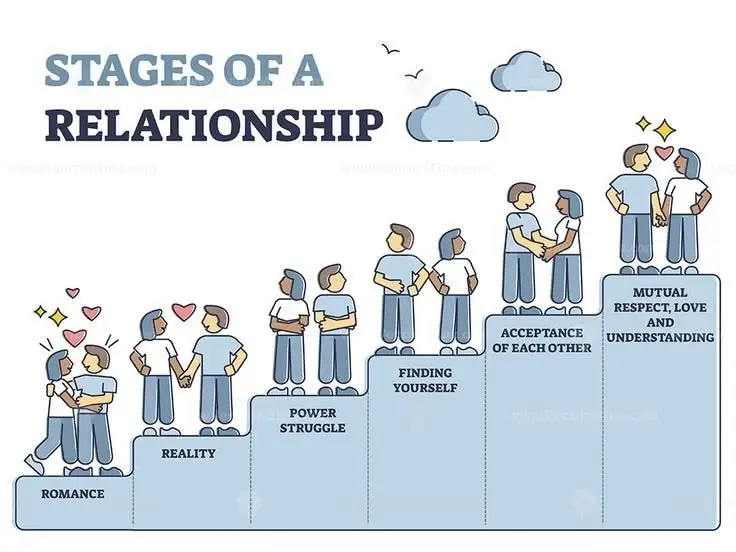
If you’ve ever wondered why the person you’re dating suddenly feels more “normal” than they did three months ago, or why a small disagreement now feels bigger than it should, you’re not imagining things. Relationships move through fairly predictable stages of a relationship, and knowing where you are can save you from panicking over something that’s actually just a natural shift.
These stages don’t always arrive in a neat, tidy order. Some couples skip one, revisit another years later, or move through two at once. But understanding the general pattern gives you something useful: context. It helps you tell the difference between “this relationship is in trouble” and “this is just what happens after the initial spark settles.”
Here’s a realistic look at the stages most couples move through, what’s actually happening at each one, and how to get through the harder ones without giving up too soon.
The Infatuation Stage
This is the stage everyone remembers fondly, and for good reason. Early on, your brain floods with dopamine and norepinephrine, the same chemical cocktail behind most feel-good highs. You think about this person constantly, overlook their flaws almost entirely, and feel a kind of giddy energy that makes everything about them seem fascinating.
This stage feels wonderful, but it’s worth knowing it’s temporary by design. Infatuation isn’t built to last forever; it’s built to bond two people long enough for something more durable to form underneath it. The risk here is moving too fast, some people rush into serious commitments during this phase, before they’ve actually gotten to know the real person underneath the chemistry.
The Adjustment Stage
Eventually, the intensity fades and you both return to your normal moods, routines, and energy levels. This catches a lot of people off guard. If you don’t know this stage is coming, it can feel like you’ve fallen out of love, or like something’s gone wrong.
Nothing has gone wrong. This is simply what happens once the initial neurochemical rush levels out. Small irritations start to surface, sex drives may not match up as perfectly as they seemed to, and minor disagreements start happening more often. This isn’t a red flag by itself. It’s actually the point where you start learning how to resolve conflict together, which matters more for the relationship’s future than how you handled the honeymoon phase.
The Power Struggle Stage
This is usually the hardest stage, and it’s also where a lot of relationships end. Instead of focusing on what you have in common, attention shifts toward differences, expectations, and disappointment when your partner doesn’t match the idealized version you built during infatuation.
Some couples try to reshape their partner into who they want them to be, which almost always backfires. Others simply give up here, assuming incompatibility rather than recognizing this as a normal, if uncomfortable, stage. Couples who get through it tend to do so by shifting from trying to change each other toward accepting each other, flaws included, and figuring out where genuine compromise is possible versus where a real incompatibility exists.
The Stability Stage
Once you’re through the power struggle, something shifts. Both partners start accepting each other more fully, without the constant push to change one another. There’s a level of ease that wasn’t there before, not because problems disappear, but because you’ve learned how to handle them together.
This stage is where couples start building real patterns, how you communicate, how you divide responsibilities, how you support each other during stress. It’s less dramatic than the earlier stages, but it’s arguably where the actual relationship starts to take shape.
The Commitment Stage
Here, both partners start actively defining what they want from the relationship and from each other. You clarify roles, talk through expectations, and figure out compatibility on a deeper level, not just “do we get along,” but “do we want the same kind of future.”
This is also where healthier communication habits tend to solidify. Couples who make it through this stage well tend to replace defensiveness and criticism with more direct, compassionate conversations about what they each actually need.
The Intimacy Stage
This stage is marked by deeper trust and emotional closeness. You’re not just compatible anymore, you’re genuinely connected. Partners in this stage tend to be more supportive of each other, share more of themselves emotionally, and start thinking in terms of “us” rather than purely “me.”
Minor conflicts still happen, but they don’t threaten the relationship the way they might have earlier on. There’s an underlying sense of teamwork that carries couples through rough patches. This is often the stage where people start seriously considering long-term commitment or marriage, not out of urgency, but because the foundation actually feels solid.
The Reassessment Stage
Somewhat counterintuitively, doubt often creeps back in after years of stability, not because anything is necessarily wrong, but because long-term relationships naturally invite reflection. You might catch yourself comparing your relationship to others, thinking about past relationships, or wondering if you made the right choice.
This stage can feel unsettling, but it doesn’t have to be dangerous. It becomes a problem mainly when one partner starts treating normal relationship friction as proof that something is fundamentally missing, rather than working through the doubt directly. Talking honestly about these feelings, rather than sitting with them silently, tends to resolve this stage far faster than avoiding it does.
The Renewal Stage
For couples who move through reassessment without letting it quietly erode the relationship, this stage often follows: a deliberate return to prioritizing intimacy, connection, and each other. Sex drives, interests, and energy levels shift over time for both partners, and this stage is about adapting together rather than drifting apart when that happens.
Couples who actively work on this, trying new things together, communicating openly about needs, making time for each other again, tend to come out of it closer than before.
Also Read: Benefits of Marriage: What Science Actually Says About Tying the Knot
The Deep Trust Stage
By this point, both partners generally know what to expect from each other and feel secure in the relationship’s direction. There’s real comfort here, but it comes with one caution: comfort can slide into complacency. Long-term trust doesn’t mean the relationship runs itself.
Couples who stay happiest at this stage tend to keep actively appreciating each other rather than assuming the relationship will sustain itself on autopilot.
What This Means for Your Relationship
None of these stages happen on a fixed timeline, and not every couple experiences them in this exact order. Some relationships move through several stages simultaneously; others revisit an earlier stage after a major life change, a move, a new baby, a career shift. That’s normal too.
What matters more than knowing exactly which stage you’re in is understanding that friction, distance, and doubt aren’t automatically signs that something is broken. Often, they’re just part of how relationships actually develop over time. The couples who make it through the harder stages generally aren’t the ones who avoid conflict entirely. They’re the ones who keep communicating honestly, adjust their expectations as the relationship evolves, and choose, again and again, to keep working on it together.
FAQ
-
How long does each stage of a relationship usually last?
There’s no fixed timeline. The infatuation stage often fades within several months to about a year as the initial chemical rush settles, but stages like stability, commitment, or reassessment can last anywhere from a year to a decade or more, depending on the couple and what’s happening in their lives.
-
Is it normal to skip a stage entirely?
Yes. Not every couple experiences every stage in the same order, or at all. Some skip the power struggle stage almost entirely if they communicate well early on, while others might revisit reassessment more than once over the years.
-
What’s the most common stage where couples break up?
The power struggle stage tends to see the most breakups, since this is where unrealistic expectations built during infatuation collide with the reality of who your partner actually is. Couples who get through it usually do so by shifting from trying to change each other toward genuine acceptance.
-
Can a relationship go backward through these stages?
Yes, and it’s fairly common. Major life changes, extended time apart, or unresolved conflict can push a couple back into an earlier stage, like reassessment or even a version of the power struggle stage, even after years of stability.
-
Does doubt in a long-term relationship mean something is wrong?
Not necessarily. Reassessment and occasional doubt are a normal part of long-term relationships and don’t automatically signal a problem. It becomes worth addressing directly if the doubt is persistent, if it’s affecting how you treat your partner, or if it’s left unspoken for a long time.
Does Any of This Sound Like Your Relationship Right Now?
Tick the ones that feel true. The more you check, the more important the video below is for you to watch.

[…] Related: Stages of a Relationship: 9 Phases Every Couple Moves Through […]